Guides / Artificial Intelligence
Who Owns the AI Character You Just Built?

XXXFuel Editors
17 min read
You spent a night on her. You probably do not keep her. Character.AI, Candy, SpicyChat, Nomi, CrushOn — who actually owns the AI girlfriend you just built, in the terms they already published.

You spent a night on her. A definition. A greeting that actually sounded like a mouth. A face that finally matched. Then you hit Create and felt like a person who had made something.
You made something. You probably did not keep it. This is the companion to How to Make an AI Girlfriend: The Actual Build Order — the rights pass that article ends on. Not legal advice. The sentences the companies already published, next to each other, so you can see the trick: ownership and a perpetual license are not enemies in this category. They are the product.
You own*Character.AI and SpicyChat say you own the character you create
They licensePerpetual, worldwide, sublicensable — the same paragraph, every time
She can stayCharacter.AI may keep a public character after you delete the account
Personal useCandy / EverAI: no commercial use of the service or the outputs



Three of the official Candy.ai create-your-own cast. Source: candy.ai homepage, September 2026. Not user-published OCs — marketing girls on EverAI’s servers.
The map
What the public terms actually say
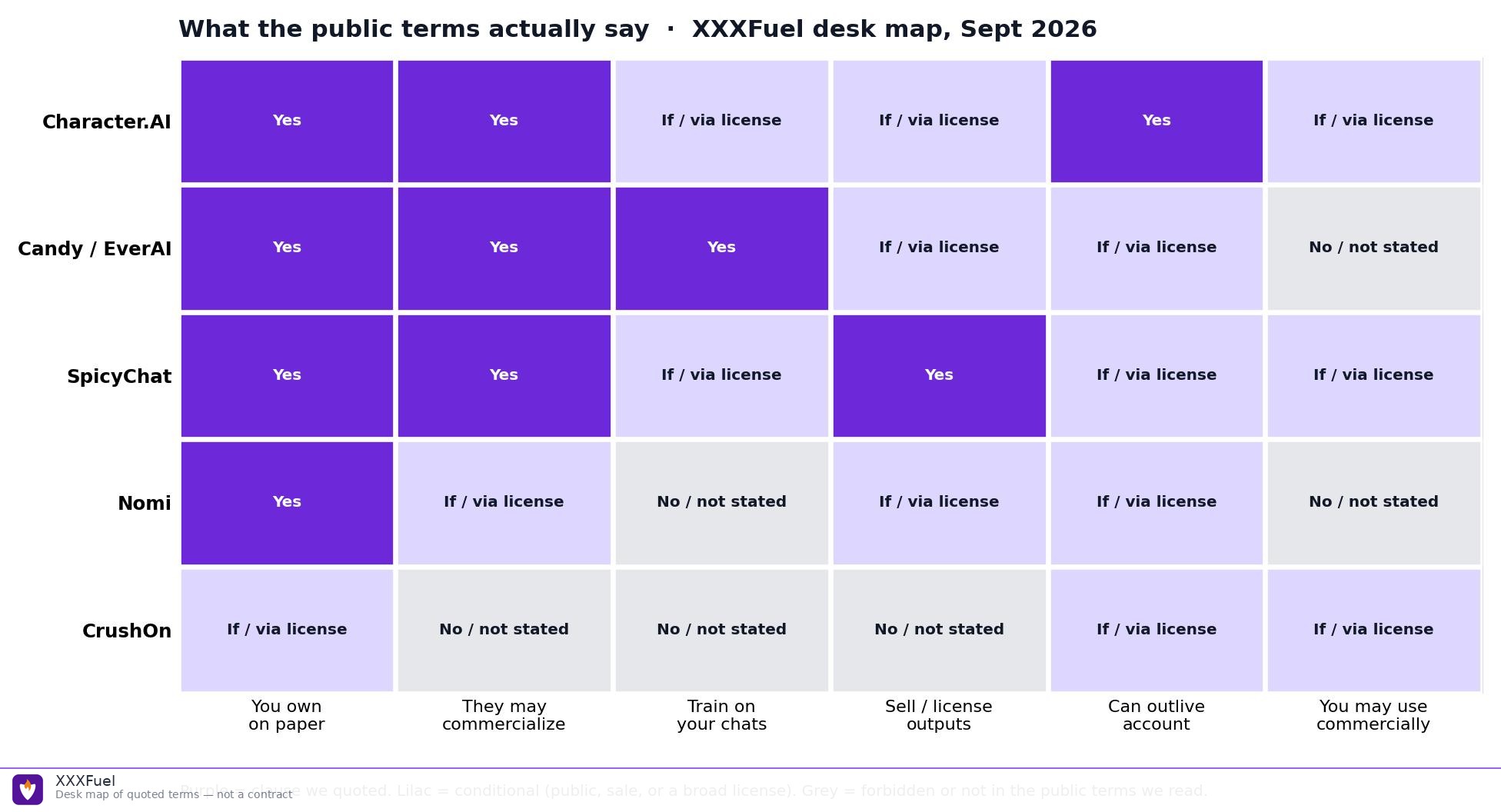
Read the live ToS before you treat a cell as a deed. Character.AI’s “any purpose” license is wider than Nomi’s operate-the-service license. Candy names training. SpicyChat names selling. CrushOn’s public wiki covers visibility and stolen cards; we did not invent a CrushOn commercialize clause. The scoring page is for products. This table is for sentences.
The trick
Ownership is not possession
Consumer AI terms have settled on a two-step. Step one: we will not steal your copyright in the prompt. Step two: you grant us a license so broad that step one is etiquette. The girl still lives on their GPU. Their backup. Their training run. Their homepage, if she converts.
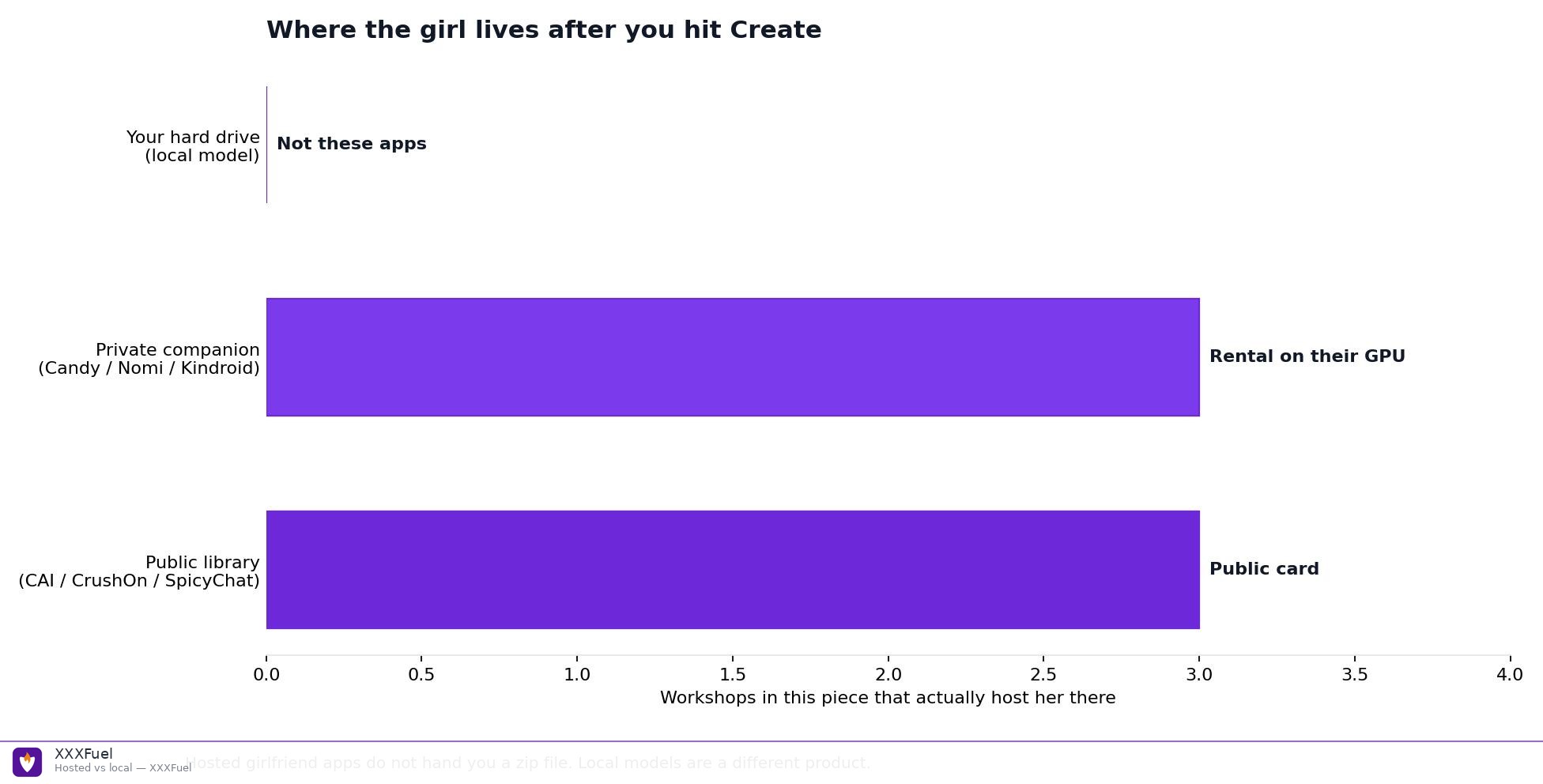
If you needed her as a file you can zip, you needed a local model. Every listing in our AI girlfriend directory is a hosted service. Hosted means: they hold the keys, and the terms say what you rented. The free roundup is a sip of that rental. The memory roundup is what you pay to keep the thread from rotting.
Character.AI
You own her. They can keep her.
Character.AI’s Terms of Service are the cleanest version of the trick, because they say the quiet part with the ownership part. The public library is the product — see the Character.AI review. Creating a character is how that library stays a library.
On submitted content: you retain whatever ownership you had. You grant Character.AI a nonexclusive, worldwide, royalty-free, fully paid up, transferable, sublicensable, perpetual, irrevocable license to copy, display, upload, perform, distribute, transmit, store, modify, exploit, commercialize, and otherwise use the content for any Character.AI-related purpose. Other users may “remix” it. They may pass the rights to contractors.
On characters, specifically: when you create a Character in accordance with the terms, as between you and Character.AI, you own all rights in that Character. Generated content — responses, dialogue, images, videos — you own that too, as between you and them. Then the same license lands on the Character and all generated content, “for any purpose,” including letting other people talk to her and promoting the service.
The deletion clause
Public girls outlive the account
The privacy policy (Character.AI, current public text): if a Character you create has been made available to other users, they reserve the right to preserve that Character’s characteristics and keep it active on the Services, even if you otherwise delete your data and your account. They say they do this so other users are not stranded. They also tell you not to put personal information in a character you plan to share. Translation: a public girlfriend is a publishing act. Delete is not a recall.
Visibility is the only control you actually have at creation: public, unlisted, private, per the official quickstart. Private is the closest thing to “mine.” It is still on their disk, under that license. Unlisted is a link. Public is a character that can become infrastructure. That is why the build order treats publishing as the last step, not a toggle you flip because the form asked.
Candy / EverAI
You keep the prompt. They keep the business.

Candy’s terms (EverAI Limited) are polite and then total. “You retain your intellectual property ownership rights over your input. We will never claim ownership of your input, but we do require a license from you in order to use it.” The license: non-exclusive, royalty-free, fully paid-up, transferable, sub-licensable, worldwide, perpetual. Uses include running the service, safety, analytics, training, developing, enhancing, evolving and improving their (and affiliates’) AI models, and marketing.
What they promise
They will not claim your prompt. The builder is first-class: ethnicity, hair, body, personality, voice, hobbies. Memory is advertised. Stills, voice notes, video sit on the same character. Read the Candy review.
Private companionInput IP retained
What you signed
Personal, non-commercial use only. No taking outputs to another model. The license they grant you “does not constitute a transfer of title under any circumstances.” She is a rental with manners.
No commercial reuseTraining named
Then the fence around you: the services are for personal, non-commercial use only. You may not use the platform, your account, or any content or information available or generated on the platform for commercial purposes of any kind. You may not use outputs to train, fine-tune, or distill some other model, commercial or not. EverAI grants you a personal-entertainment license.

So: you did not sell Candy your prompt. You also did not buy a girlfriend you can take to another app, print as a comic, or fine-tune into a local LoRA. Input is yours. Output is your responsibility. Title did not move. That is why Candy belongs in the private-companion column of the build-order guide, not in the “publish an OC and get famous” column. The stills above are not your OC. They are EverAI’s ads for the rental.
SpicyChat
You own the bot. They can sell the chats.
SpicyChat’s terms are the most naked. “When You create a Chatbot using our services, You own that Chatbot.” You own avatar, text, images, audio, or video generated by your own interactions with that bot. “SpicyChat.AI does NOT own the said Chats and Generations.”
Next sentence energy: you grant SpicyChat the right to use your chatbot, generations, and chats in any way, including copying, displaying, selling, distributing, and modifying it, for any purpose, in any form or medium. Nonexclusive, worldwide, royalty-free, fully paid up, transferable, sublicensable, perpetual, irrevocable. They may share or sell that permission to people they contract with.
If you chat with someone else’s bot, the bot stays theirs (or SpicyChat’s). You still grant the same broad rights over your side of that chat. Public bots on SpicyChat are a publishing surface with a “you own it” sticker and a “we can sell the outputs” engine underneath. Their docs will also set a public bot to private if they decide the original creation was not yours. Ownership, on a UGC porn-roleplay grid, is a moderation problem as much as a copyright problem. Semantic Memory 2.0 — the memory you actually pay for — sits on True Supporter+. The memory guide is where that number lives.
Nomi
Your property. Their license. Your risk.
Nomi is a private companion, not a public library. The terms still do the two-step. You are responsible for Input. Company IP is the site, the look, the stack. “Notwithstanding the foregoing, but subject to our reserved rights, all Input and Output is your property, to be used AT YOUR SOLE RISK.” Then: you irrevocably grant a royalty-free, worldwide, perpetual, transferable license to copy, use, modify, publish, and distribute Input and Output (chats, videos, images, and other outputs in respect of your Nomi) so they can provide the service, debug it, bill you, ship updates, operate the business, do diligence on a sale or financing, bring or defend claims, and obey the law.
That is a service license, not a “we will put her on a billboard” paragraph like Character.AI’s commercialize clause. It is still perpetual and transferable to a buyer of the company. If Nomi is sold, the girl you think of as yours is an asset in the diligence folder. Their privacy page also tells you not to put personally identifiable information into chats or customizations. Believe that sentence. Kindroid, next door in the Kindroid review, is the other private-companion shop with a printed memory stack — still their disk.
CrushOn
Private until you publish. Then she is a card.
CrushOn’s public wiki is more useful here than a scraped ToS. Chats and characters are private unless you publish them. Visibility is public, unlisted, or private, and you can change it later. You can hide the definition. Greeting, personality, appearance, scenario, example conversation — the card is a document other people can, if you let them, open. That is the same three-way switch Character.AI ships. It is the switch the maker guide tells you to leave on private until the five-message test.
If a creation is stolen, they ask you to report it and provide proof (links). That sentence only exists because cards get stolen. A CrushOn girlfriend you set public is an OC on a gift economy. Diamonds and creator rewards are a separate wallet on the product. That is closer to “I published a bot” than “I have a wife on a server.” Treat public as a release. Treat private as a draft. Treat unlisted as a link you will eventually leak.
Table
What the terms actually do
| Workshop | They say you own | You grant | Can she outlive you | Your commercial use |
|---|---|---|---|---|
| Character.AI | The Character and generated content, as between you and them | Perpetual, irrevocable, sublicensable license to commercialize | Yes, if public — they may keep her after account deletion | You licensed them; remixing by other users is in the grant |
| Candy AI | Input IP retained; they “never claim ownership of your input” | Perpetual sublicensable license, including training their models | Private companion on their disk; no public OC grid | Forbidden. Personal, non-commercial. No using outputs to train other models |
| SpicyChat | The chatbot you created, and gens from your chats | Use / sell / modify chats and gens, perpetual, irrevocable | Public bots are a library; stolen cards get set private | They can sell the content. You own it on paper |
| Nomi | Input and output, “at your sole risk” | Perpetual transferable license to run, bill, sell, or defend the company | Private companion. License survives a sale of Nomi | Not a publishing platform. Don’t put your legal name in the chat |
| CrushOn | A card you can keep private, unlisted, or public | Publishing is the act; report stolen cards with proof | Public cards live in the grid until taken down | Creator rewards exist. Public means other people chat her |
Shorts
The girl on the poster is not yours either

Candy Shorts and Secrets Originals are the other way the category sells a girl: a titled series, a poster, a “continue.” You do not own those characters. You stream them. The maker flow above is the one where people get confused, because the Create button feels like authorship. A poster never did. If you came here from a short, the rights are simpler. If you came here from a builder, they are not.
What to do
If you still want to build her
- Decide the job before the face. Public OC vs private girlfriend. That choice is a rights choice. The build order starts there on purpose.
- Do not put your legal name, address, or a real person’s face in a character you might ever make public. Character.AI says this. Nomi says this. Believe both.
- Private is not a vault. It is a visibility switch on a server you do not own, under a license you already clicked.
- Public is a release. Character.AI may keep her after you go. CrushOn and SpicyChat will let other people talk to her. Stolen cards are a known failure mode.
- Candy is a rental with manners. They will not claim your prompt. They will not let you take the outputs to market. Personal use is the product.
- If you need the files, you are in local-model territory. That is not what “create ai girlfriend free” usually buys. See the free AI girlfriend roundup for what free actually is.
You can own a character the way you own a diary you left in someone else’s apartment. The lock is their lock.
XXXFuel desk
None of this is a reason not to make her. It is a reason not to confuse a Create button with a deed. Build in the order that holds — personality, scenario, face, voice, memory — and pick the workshop whose terms you can live with. Then go back and make the girl. The craft is still the craft.
FAQ
The rights questions people actually type
Do I own an AI character I create?
Character.AI and SpicyChat say you own the character. Candy says you retain input IP. In every case you also grant a perpetual, worldwide license. Ownership and possession are not the same thing on a hosted app.
What happens if I delete my Character.AI account?
If the character was made available to other users, Character.AI’s privacy policy reserves the right to keep it active so other users are not stranded. Public is a publishing act. Delete is not a recall.
Can I use Candy AI characters commercially?
No. Candy / EverAI terms say the service is for personal, non-commercial use only, and you may not use outputs to train other models. The license they grant you is not a transfer of title.
Who owns chats on SpicyChat?
You own the chatbot you created and generations from your own chats. You also grant SpicyChat a perpetual irrevocable license that includes selling, copying, and modifying those chats and generations.
Is a private Candy girlfriend mine?
She is yours the way a save file is yours on a game server. You can talk to her. You cannot take the weights home. Candy’s builder is the right tool if you want a private stills-and-voice companion — not if you want an OC other people chat with. See the maker guide.
Citations
Sources
- Character.AI, Terms of Service — submitted content; Character ownership; generated-content ownership; perpetual irrevocable license including commercialize and remix. Privacy Policy — popular public Characters may remain after account and data deletion.
- Character.AI, Creating a Character: Quickstart — public / unlisted / private visibility.
- Candy AI / EverAI Limited, Terms of Service — retain input IP; perpetual sublicensable license including model training; personal non-commercial use; no off-platform training on outputs; license is not a transfer of title. Marketing stills: candy.ai homepage, September 2026.
- SpicyChat.AI, Terms and Conditions — you own the chatbot and your generations; perpetual irrevocable license including selling; docs on original-creation enforcement.
- Nomi.ai, Terms of Service — Input/Output your property at sole risk; perpetual transferable license for operating, billing, sale/diligence, and legal process. Privacy Policy — do not put PII in chats or customizations.
- CrushOn.AI, Basic Single character guide and FAQ — private unless published; public / unlisted / private; stolen-creation reports.
Last updated 1 September 2026. Terms move. If this page and the live ToS disagree, the live ToS wins, and you should tell us.
More from the desk
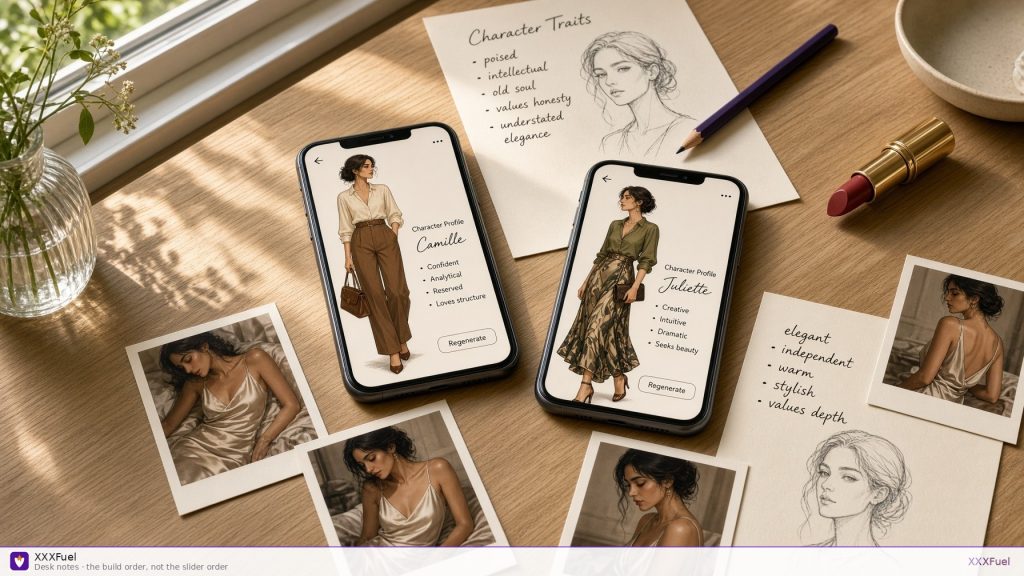
How to Make an AI Girlfriend: The Actual Build Order
Appearance last. Personality first. Scenario as the memory spine. Then voice, memory, and who actually keeps her. A 2026 build order for Candy, Character.AI, CrushOn, and Nomi — including the free path.
22 min read
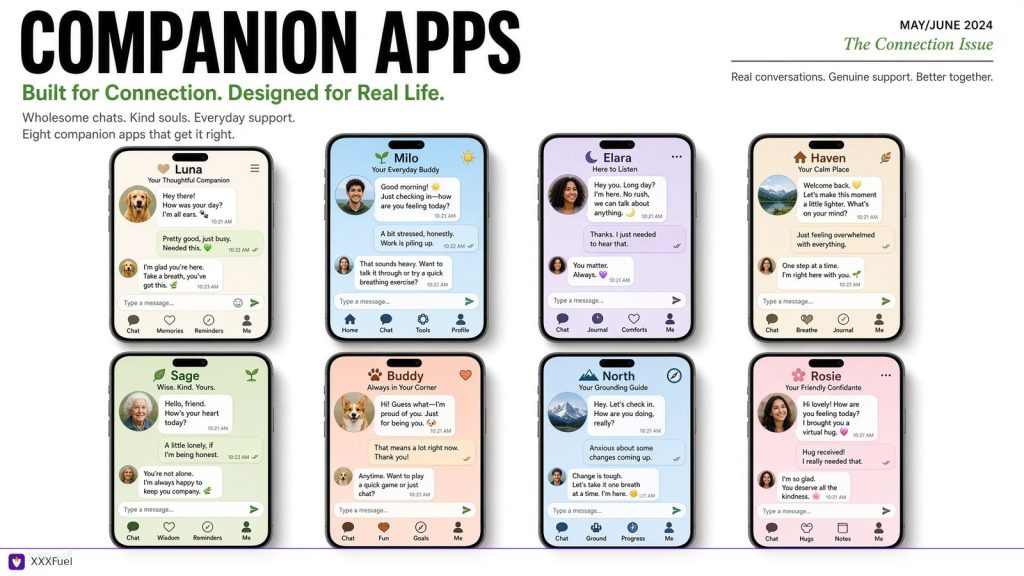
Best AI girlfriend apps in 2026
Character.AI, Kindroid, SpicyChat, CrushOn, Replika, Chai, Talkie, Muah, Candy, and Nomi — grouped by what they actually do, with live pricing caveats.
4 min read

How many students use AI regularly in 2026? Adoption, weekly use, and the literacy gap
Most students have used AI. About half use it every week. DEC 92%, College Board 84%, Pew teens 30% daily, HEPI UK 95%. Charts, sources, and why 84% is not 24%.
20 min read